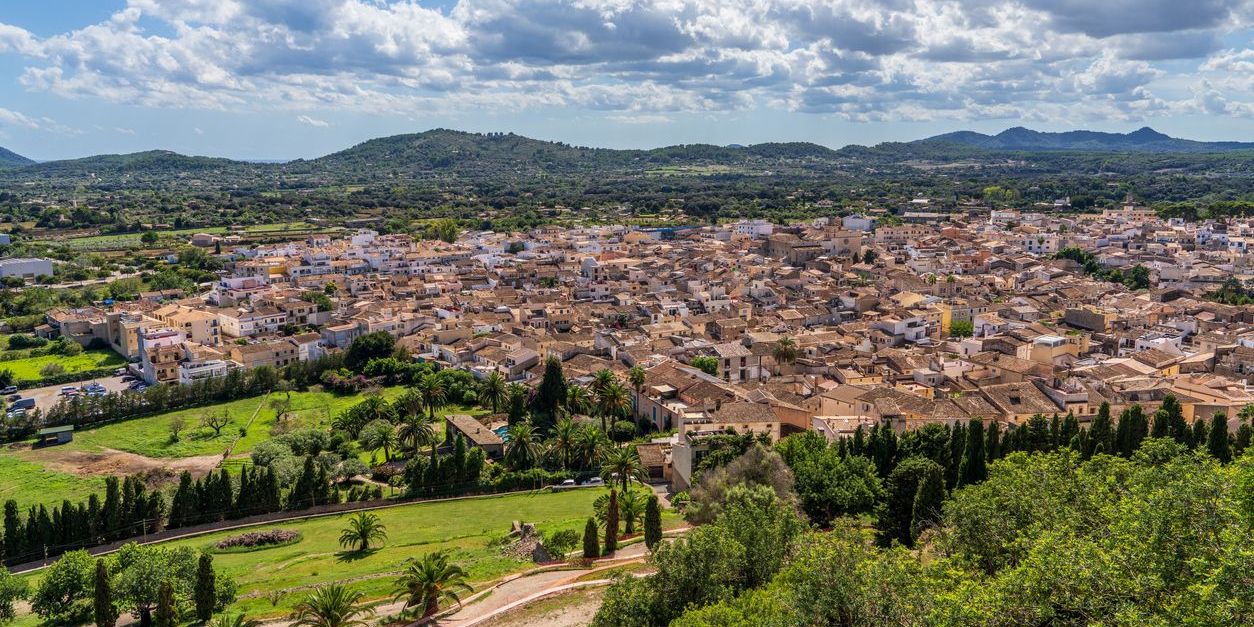
There are towns in Mallorca that have been featured in tourist guides for decades, and there are others that remain off these routes but have nothing to envy them for. One of them is Artà, a town located in the northeast of the island, in the Llevant region.

What does it have? History, an old town with plenty of character, coves and beaches and, as a finishing touch, one of the most spectacular caves in Mallorca.

So why isn’t it as touristy as Valldemossa or Sóller? We don’t know, but what we do know is that we’re going to keep giving you reasons to come and visit Artà in Mallorca.

Table of Content

Learn a bit about Artà through its history

Artà comes from the Arabic yartan, which means garden. But the history of this municipality begins before the Arabs set foot on these lands.

The archaeological remains in the area prove that this area was inhabited more than 3,000 years ago. One piece of evidence is the Ses Païsses archaeological site; it’s a few kilometers from the center and is one of the most important in the Balearics.

It has perfectly preserved stone walls that protected around 60 dwellings. It was excavated in the 1960s by Italian archaeologist Giovanni Lilliu and today it can be visited—one of the things you absolutely must do in Artà!

Then came the Romans, then the Arabs, and in the 13th century the Christian conquest of James I, which changed the layout of the town but still preserves traces of all these periods.

What to see in the historic center of Artà

The historic center of Artà must be explored on foot. The main street is Carrer Ciutat, a pedestrian street from which you can see, in the background, the Sanctuary of Sant Salvador, where the weekly market is held—which we’ll talk about later—and where most of the town’s bars, restaurants, and shops are concentrated.

Starting here is more than fine, but there’s more!

que-ver-arta-mallorca.jpg

Sanctuary of Sant Salvador

Climbing up to the Sanctuary of Sant Salvador is something you can’t miss during your visit to Artà. It’s at 182 meters high and from the top you can see the entire town center, as well as the Sierra de Llevant and the Mediterranean.

You can visit its interior and its small museum completely free from 8:00 AM to 6:00 PM.

And watch out, because this sanctuary has a twisted history: it was burned down by the town’s own inhabitants and the current building was constructed on its remains. Why? It’s best to ask around town to see what each person tells you; there’s more than one theory, although most say it was to stop the Black Death epidemic, since the Sanctuary of Sant Salvador had been used as a makeshift hospital.

Coves d'Artà

The Coves d’Artà are, technically, in the municipality of Capdepera —they’re one of the loose ends of an old administrative division that hasn’t been entirely clarified. Well, the thing is they’re known as the Caves of Artà and they’re about 15 kilometers from the town. They served as a refuge for pirates and as a sanctuary for Moorish army fighters in the 13th century. They’re located about 50 meters above sea level, at Cap Vermell, and their entrance is a huge rock opening.

Once inside these cavities—some of the best caves in Mallorca!—the guided tour lasts between 35 and 40 minutes and covers about 700 meters of galleries and chambers—Hell, Purgatory, the Theater and the Organ, and the Hall of Flags—where you’ll find stalagmites up to 22 meters high.

The temperature here is 18°C and the humidity is 80%, so if you go in summer, bring a sweater or jacket.

They’re much less well-known than the Drach Caves, so fewer people visit them and therefore they’re quieter. They’re open all year round and admission is under €15.

arta-mallorca-cuevas.jpg

Regional Museum of Artà

Within the old town there’s also the Regional Museum of Artà, which has a collection of archaeological remains and ethnographic pieces that will help you understand why the municipality is the way it is.

Casa de Ca'n Cardaix

And as with any proper visit to a municipality, you’ll stop by its town hall square, right? Well, then take the opportunity to learn about the history of Casa de Ca’n Cardaix, which dates from the 16th century and is next to the town hall.

This building is one of the best-preserved examples of traditional Mallorcan architecture; it has a sandstone portal, barred windows, a Renaissance window with plant motifs, and a beautiful garden that you can see because it functions as the terrace of a restaurant.

Beaches, coves, and natural spaces you can't miss in Artà

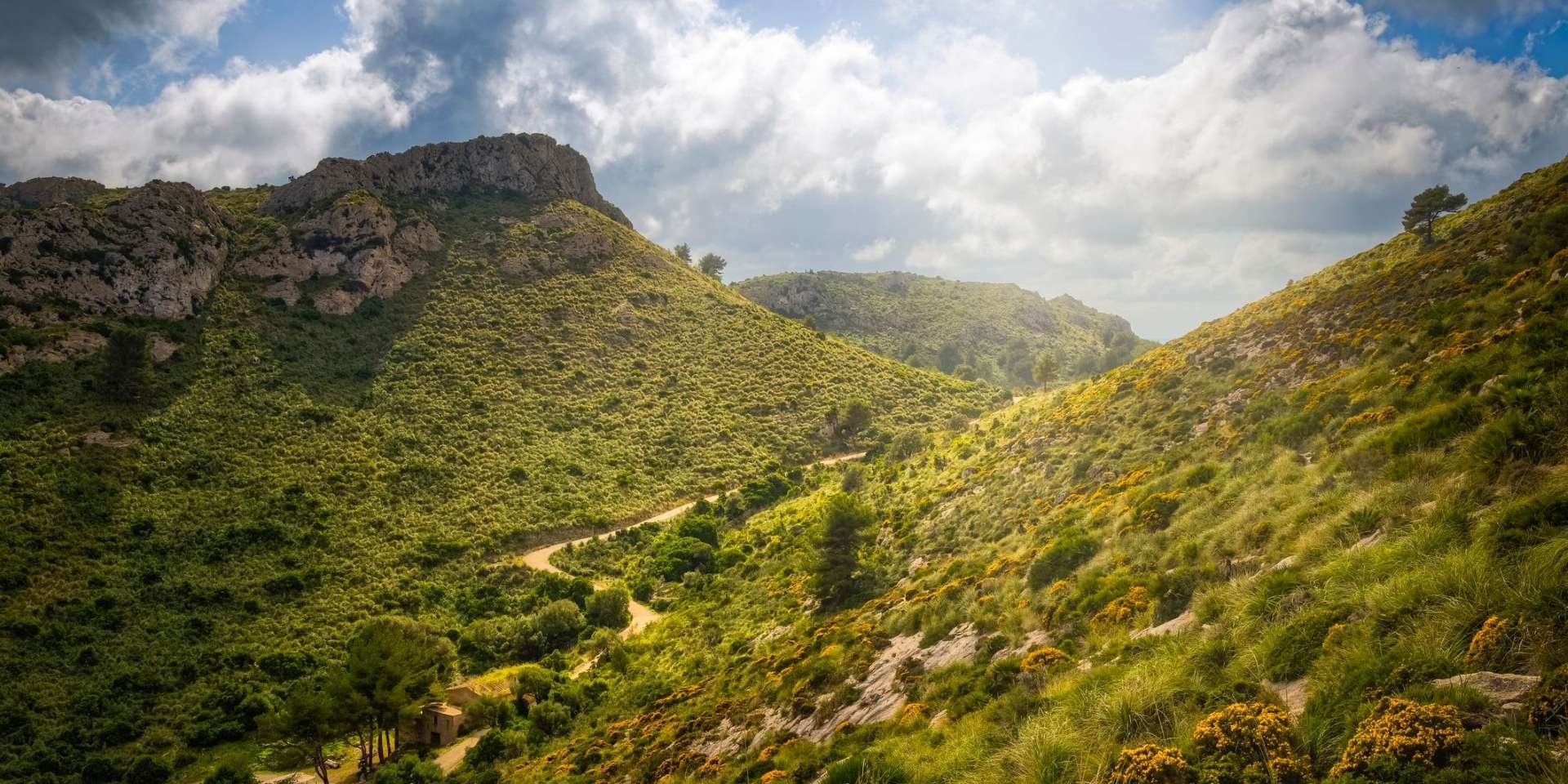
Artà doesn’t have its own coastline, but the Llevant Peninsula Natural Park is very close, which means if you come to visit the town you’ll be able to enjoy more than 1,600 hectares of protected land and up to fourteen different hiking routes. The most popular are those that end at a beach: s’Arenalet des Verger is one of the most beautiful coves in Mallorca.

And on the way, stop by the Ermita de Betlem, a 19th-century temple in the middle of the mountains that’s worth visiting, with a very peaceful setting and views that are especially enjoyable if you visit early in the morning, before the heat sets in.

More beaches? Cala Mesquida and Cala Ratjada, the area’s benchmark beaches, are less than 20 minutes away by car. Cala Mesquida is wilder, with dunes and hardly any buildings, and Cala Ratjada has a port, promenade, and more leisure options.

Parc-Natural-de-la-Peninsula-de-Llevant-ruta.jpg

Mallorcan gastronomy is also present here

Artà has one of the few markets that are held in a traditional way across the island. Every Tuesday, from 9:00 AM to 2:00 PM, the main street fills with stalls selling typical Mallorcan food, local crafts made with palm leaves—baskets, hats, and bags—textiles, leather goods, fruits and vegetables from nearby orchards.

And something you absolutely must try are the Moyà sweet herbal liqueur, an anise liqueur with typical Mallorcan herbs, and ARTÀsanes savory biscuits; both products are made here, in Artà!

Looking for a place to eat? Any restaurant or bar in Artà will offer you a full menu with typical products, but you definitely need to stop by Café Parisien for breakfast, a bohemian-style and vintage venue with an interior garden terrace.

And for lunch or dinner, Restaurant Sa Gripia and Ca’n Jaume are excellent; order arròs brut, the tumbet—potatoes, eggplant, and peppers in tomato sauce—meat or fish panades and, if the season is right, sobrasada and ensaimadas.

Come and discover Artà with the best accommodation

Artà has everything you could ask for from an inland town, and the accommodations we have at Ideal Property have everything your expectations are hoping for. Don’t let planning your vacation become an uphill task. Take a look at our carefully selected collection of villas and holiday homes, choose your favorite in just a few clicks, and get ready to enjoy Artà in Mallorca.